Laser Hair Removal Training in Delhi NCR: Beginner's Guide to Professional Aesthetic Training
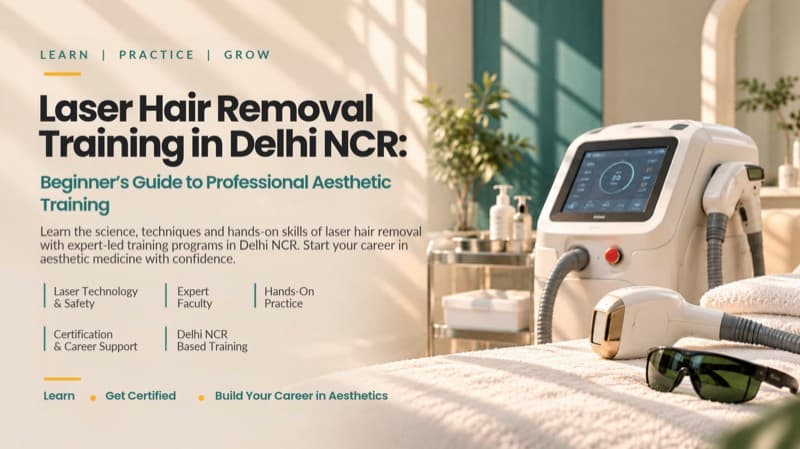
Laser-based aesthetic treatments have become an important part of modern dermatology and aesthetic practices. Among these, laser hair removal is widely used as a method of achieving longer-lasting hair reduction compared with conventional temporary hair-removal methods.
As demand for professional laser services continues to grow, trained professionals are increasingly needed in dermatology clinics, aesthetic centres, laser clinics and beauty and wellness establishments.
Laser Hair Removal Training in Delhi NCR can help aspiring aesthetic professionals understand laser technology, skin and hair assessment, treatment protocols, safety precautions and professional client care.
At Skinfinity Academy of Cosmetology, laser training combines theoretical education with practical-oriented learning to help students understand the principles behind professional laser hair reduction.
What Is Laser Hair Removal?
Laser hair removal, more accurately referred to as laser hair reduction, uses concentrated light energy to target melanin within the hair. The absorbed energy produces heat that can affect the hair follicle and reduce the growth of treated hair over a series of sessions.
The treatment is different from shaving, waxing or threading because it works at the level of the hair follicle rather than simply removing visible hair from the surface.
The response to treatment can vary depending on factors such as hair colour, hair thickness, skin type, hormonal influences, treatment area and the technology being used.
Increasing Demand for Laser-Based Aesthetic Services
Laser technology is now commonly incorporated into many dermatology and aesthetic practices.
Clients may seek professional laser hair reduction for areas such as:
Face
Underarms
Arms
Legs
Back
Chest
Bikini area
Because laser devices involve energy-based treatment, proper training is important. Professionals need to understand the technology, patient selection, treatment parameters, contraindications and safety procedures before working with laser equipment.
How Does Laser Hair Removal Work?
Understanding the basic science behind laser hair reduction is an important part of professional training.
Basic Principle of Laser Hair Reduction
Laser hair reduction works primarily through selective photothermolysis. The laser energy is absorbed preferentially by melanin in the hair, producing heat that can damage the targeted follicular structures while aiming to minimise unnecessary injury to surrounding skin.
Different laser systems have different wavelengths and characteristics. Choosing an appropriate device and treatment approach requires an understanding of skin type, hair characteristics and the specific technology being used.
Professional training helps learners understand these principles before progressing to treatment protocols.
Hair Growth Cycle and Treatment Sessions
Hair grows through different stages, including anagen, catagen and telogen.
Laser treatment tends to be more effective when hairs are in the anagen or active growth phase, when the follicle contains more relevant pigment for the laser to target.
Since not all hairs are in the same growth phase at a given time, multiple treatment sessions are generally required.
The number and frequency of sessions can vary depending on:
Treatment area
Hair density
Hair thickness
Skin type
Hormonal factors
Individual response
Laser technology used
Understanding the hair-growth cycle helps professionals explain treatment expectations accurately to clients.
What Do You Learn in Laser Training?
A professional laser hair reduction course should go beyond simply learning how to operate a machine. Participants need to understand the relationship between technology, skin, hair and treatment safety.
Laser Technology Fundamentals
Students can learn the basic principles of laser and light-based technologies used in aesthetic practice.
Training may introduce:
Laser wavelengths
Energy and fluence
Pulse duration
Spot size
Cooling systems
Device settings
Basic laser physics
Differences between commonly used laser technologies
Understanding these fundamentals helps learners appreciate why treatment parameters need to be selected carefully.
Skin and Hair Assessment
Assessment is an important step before laser treatment.
Students can learn how to consider:
Skin type
Skin tone
Hair colour
Hair thickness
Hair density
Treatment area
Previous hair-removal methods
Relevant medical and treatment history
Proper assessment helps determine whether a person may be suitable for treatment and assists in selecting an appropriate treatment approach.
Selecting Appropriate Treatment Parameters
Laser parameters should not be selected using a one-size-fits-all approach.
Training can introduce participants to factors that influence treatment settings, including:
Skin type
Hair characteristics
Treatment area
Laser wavelength
Pulse duration
Fluence
Spot size
Cooling requirements
Participants learn why inappropriate settings may increase the risk of adverse effects while insufficient settings may result in limited treatment response.
Actual parameter selection should follow the specific device manufacturer's instructions, clinical protocols and the practitioner's permitted scope of practice.
Treatment Protocols
Professional laser training may cover the complete treatment workflow, including:
Client consultation
Skin and hair assessment
Treatment-area preparation
Device preparation
Appropriate parameter selection
Laser application
Skin observation during treatment
Post-treatment care
Documentation and follow-up
A structured protocol helps maintain consistency and supports safer treatment delivery.
Safety Precautions and Aftercare
Safety should be a central part of laser education.
Students can learn about:
Protective eyewear
Device safety
Skin cooling
Treatment-area preparation
Patch testing where appropriate
Contraindications and precautions
Recognising unwanted skin reactions
Post-treatment sun protection
Aftercare instructions
Equipment hygiene
Laser procedures should always be performed according to professional training, device instructions and applicable regulations.
Why Is Skin Type Assessment Important?
Skin assessment is one of the most important elements of laser hair-reduction training.
Understanding Different Skin Types
Skin can respond differently to laser energy depending on its pigmentation.
The Fitzpatrick skin type classification is commonly used as a framework for assessing skin phototype. Understanding skin pigmentation helps practitioners consider how much laser energy can be safely delivered and which technology may be appropriate.
This is particularly relevant when treating individuals with darker or more pigmented skin, where inappropriate settings may increase the risk of complications such as burns or post-inflammatory hyperpigmentation.
Importance of Customized Treatment Protocols
Every client has different skin and hair characteristics.
A professional should consider factors such as:
Skin phototype
Hair colour
Hair thickness
Treatment area
Previous tanning
Recent skincare procedures
Medical history
Device characteristics
A customised approach allows treatment protocols to be adapted rather than relying on identical settings for every client.
Preventing Avoidable Complications
Appropriate assessment and parameter selection can help reduce avoidable treatment-related risks.
Training should therefore include recognition of situations where treatment may need to be postponed, modified or referred to an appropriately qualified professional.
Who Can Pursue Laser Aesthetic Training?
Eligibility for laser training varies according to the course, device, workplace and applicable professional regulations.
Aesthetic Therapists
Aesthetic therapists can consider laser-focused education to develop their understanding of energy-based aesthetic procedures, subject to their qualifications and permitted scope of practice.
Cosmetology Professionals
Cosmetology professionals may pursue laser training to expand their understanding of modern aesthetic technologies and professional treatment workflows.
Beauty Professionals
Beauty and wellness professionals interested in developing their technical knowledge may consider foundational laser education where the programme is appropriate for their professional background.
Other Eligible Learners
Healthcare professionals and other learners may also be eligible for specific laser programmes depending on their qualifications and the course requirements.
Before enrolling, students should confirm the programme's eligibility criteria and understand which procedures their qualification allows them to perform.
Why Choose Skinfinity Academy of Cosmetology for Laser Training?
Skinfinity Academy of Cosmetology provides aesthetic education designed to combine theoretical knowledge with practical-oriented learning.
Theory + Practical Learning
Understanding laser treatment requires both technical knowledge and practical awareness.
The training approach can introduce students to laser fundamentals, skin assessment, treatment protocols, safety considerations and professional workflow.
Demonstration-Based Training
Demonstrations allow students to observe how a professional laser treatment is structured.
Learners can become familiar with:
Treatment preparation
Equipment handling
Client positioning
Parameter considerations
Safety measures
Treatment workflow
Post-treatment care
Safety-Focused Approach
Laser safety is an important component of professional training.
Students can learn about protective measures, contraindications, skin assessment, appropriate treatment parameters and potential adverse reactions.
Professional Learning Environment
Training in a professional aesthetic environment can help students understand how laser treatments are incorporated into real-world clinic workflows.
The emphasis is on developing knowledge and responsible treatment practices rather than simply learning machine operation.
Career Opportunities After Laser Training
Laser-focused education can help professionals develop skills relevant to several areas of the aesthetics and beauty industry.
Dermatology and Aesthetic Clinics
Dermatology and aesthetic clinics commonly use laser and light-based technologies for different indications. Trained professionals may work in treatment-support or other roles appropriate to their qualifications.
Beauty and Wellness Centres
Beauty and wellness establishments may offer laser hair-reduction services and can provide opportunities for professionals with relevant training.
Laser Treatment Centres
Dedicated laser centres may also employ trained professionals for client preparation, treatment assistance and other permitted responsibilities.
Career progression can depend on qualifications, practical experience, additional certifications and the professional scope permitted by applicable regulations.
Important Skills to Develop During Laser Training
A well-structured laser hair-removal programme can help learners develop knowledge in areas such as:
Basic laser technology
Skin and hair assessment
Fitzpatrick skin typing
Hair-growth cycle
Treatment planning
Device handling
Treatment parameters
Hygiene and safety
Client communication
Aftercare
Documentation
Recognition of potential adverse reactions
These skills can provide a stronger foundation for professionals interested in working with laser-based aesthetic services.
FAQs
Is laser training suitable for beginners?
Some foundational laser courses are designed for beginners, while advanced programmes may require previous professional or healthcare qualifications. Students should check the eligibility criteria of the specific programme before enrolling.
Does the course include practical sessions?
Practical exposure depends on the individual course structure. Skinfinity Academy of Cosmetology focuses on practical-oriented learning and demonstrations to help participants understand professional laser treatment workflows.
What safety protocols are taught?
Laser training may cover protective eyewear, skin assessment, contraindications, device safety, appropriate parameter selection, cooling, hygiene, patch testing where applicable and post-treatment aftercare.
How many sessions are required for laser hair reduction?
There is no single number that applies to every client. Treatment response depends on factors such as hair growth cycle, hair characteristics, treatment area, skin type, hormonal influences and the technology used.
Is laser hair removal permanent?
Laser treatment is generally described as long-term hair reduction rather than guaranteed permanent removal. Some hair may regrow over time, and maintenance treatments may be required.
Why is skin type assessment important before laser treatment?
Skin pigmentation influences how laser energy interacts with the skin. Proper assessment helps professionals select an appropriate treatment approach and reduce the risk of unwanted reactions.
Can cosmetologists learn laser hair reduction?
Depending on the programme and applicable regulations, cosmetology professionals may undertake laser-focused training. However, the procedures they can perform depend on their qualifications, training, workplace protocols and local requirements.
Is laser hair reduction safe?
Laser hair reduction can be performed safely when appropriate technology, patient selection, treatment parameters and safety protocols are used by properly trained professionals. However, adverse reactions can occur, making professional training and assessment important.
Conclusion
Laser hair reduction is a technology-driven aesthetic procedure that requires more than basic knowledge of machine operation. Professionals need to understand laser fundamentals, skin and hair assessment, treatment parameters, hair-growth cycles, safety protocols and aftercare.
Laser Hair Removal Training in Delhi NCR can provide aspiring aesthetic and cosmetology professionals with a structured introduction to these essential concepts.
At Skinfinity Academy of Cosmetology, learners can develop theoretical knowledge and practical understanding through demonstrations and professional training. With appropriate education and continued learning, participants can build a foundation for opportunities in dermatology clinics, aesthetic centres, laser treatment centres and beauty and wellness establishments.